
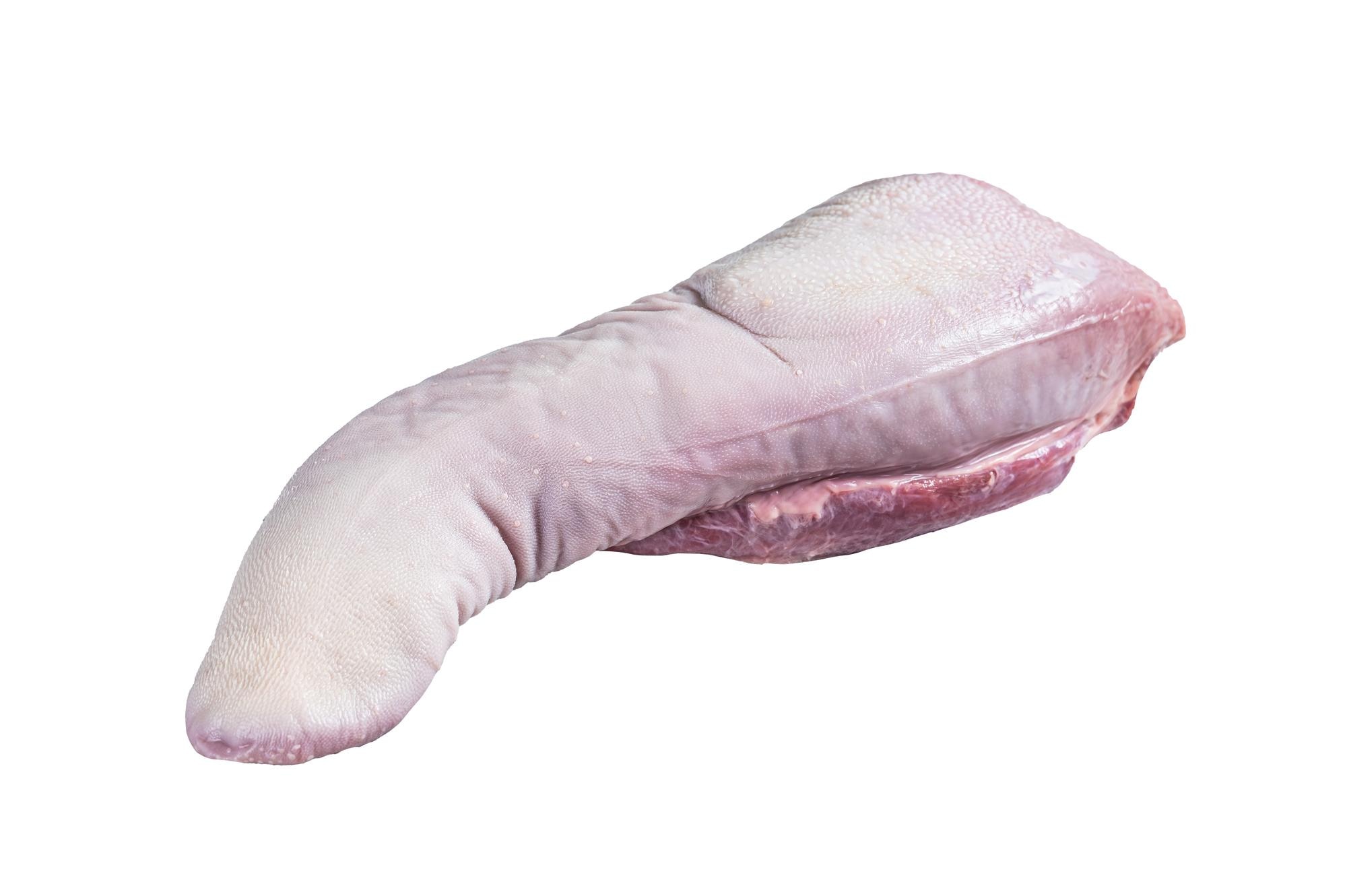
About This Cut
Beef tongue is exactly what it sounds like — the tongue muscle of the cow. It's a large, firm organ meat with a thick outer skin that is removed after cooking. Despite initial hesitation from some diners, tongue is widely beloved in many cuisines for its surprisingly tender, rich texture and deep, savory flavor — similar to brisket but even more unctuous. It has a fine, smooth grain with no tough fibers once properly prepared.
Commonly Used In
- Lengua tacos (a Mexican street food classic)
- Jewish deli pickled tongue sandwiches
- Beef tongue with salsa verde
- Smoked tongue (sliced thin like deli meat)
- Eastern European cold tongue in aspic
Fun Facts
- Tongue is one of the fattiest organ meats and one of the most tender once slow-cooked
- The outer skin must be peeled off after cooking — it slides off easily when the tongue is still hot
- Popular in Mexican, Jewish, Eastern European, Japanese, and Korean cuisines
- In Japan, gyutan (grilled beef tongue) is a regional specialty of Sendai City
- Unlike most organs, tongue responds very well to slow braising and tastes more like a rich beef cut than a typical offal
Best Cooking Methods
- Braising
- Simmering (boiling then peeling)
- Grilling (sliced, after braising)
Nutrition (per 3 oz / 85g cooked)
- Calories: 241
- Protein: 19g
- Total Fat: 18g
- Saturated Fat: 7g
- Cholesterol: 112mg
- Sodium: 66mg
- Iron: 19% DV
- Zinc: 24% DV