About This Cut
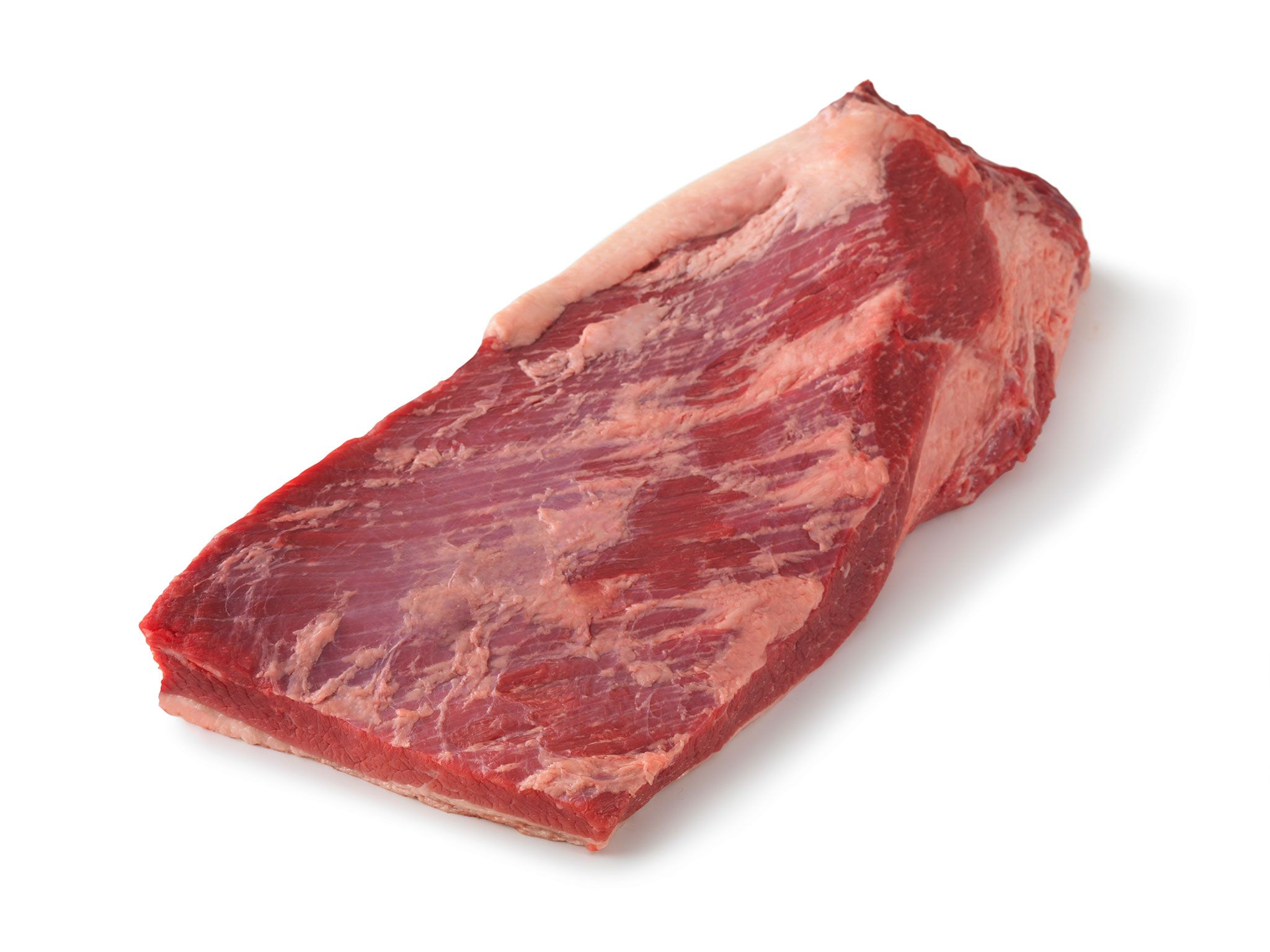
Brisket comes from the breast and lower chest of the cow, just below the chuck. Because cattle don't have collarbones, the brisket muscles support a significant portion of the animal's weight, making them exceptionally tough and loaded with connective tissue. With the right low-and-slow treatment, that toughness transforms into extraordinary tenderness and a deeply smoky, beefy flavor.
Commonly Used In
- Texas-style smoked BBQ brisket
- Jewish braised brisket (often with onions and wine)
- Corned beef and Reuben sandwiches
- Pastrami
- Vietnamese pho (as a slow-simmered broth component)
Fun Facts
- Brisket is a cornerstone of Texas BBQ culture — pitmasters may smoke it for 12–18 hours
- It's the traditional cut used for corned beef and pastrami
- Comes in two parts: the flat (leaner) and the point (fattier, more flavorful)
- The "bark" — the dark, crispy crust that forms during smoking — is prized by BBQ enthusiasts
Best Cooking Methods
- Smoking
- Braising
- Slow roasting
Nutrition (per 3 oz / 85g cooked)
- Calories: 247
- Protein: 21g
- Total Fat: 17g
- Saturated Fat: 6g
- Cholesterol: 79mg
- Sodium: 55mg
- Iron: 15% DV
- Zinc: 28% DV